
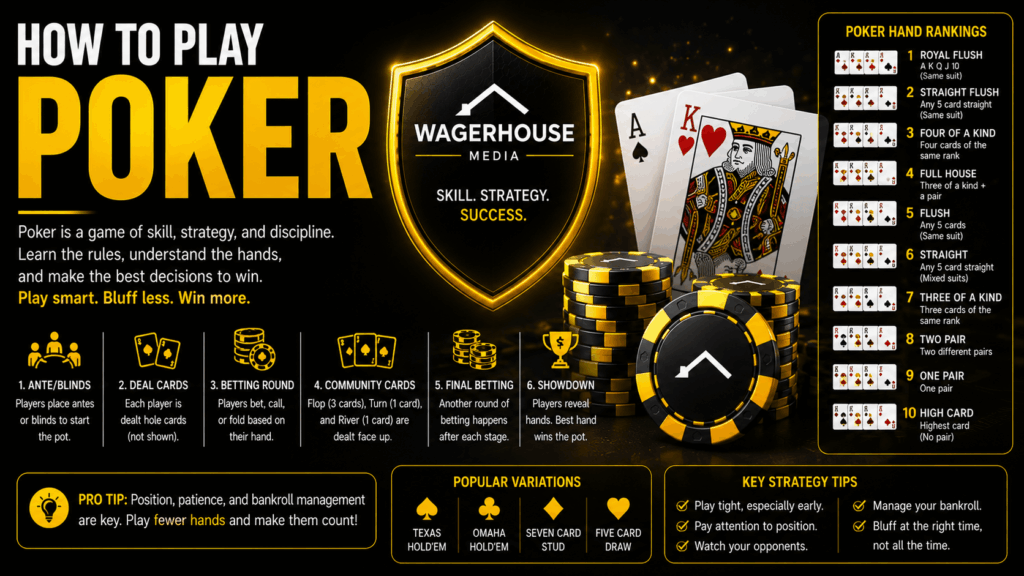
How To Play Poker
Poker is one of the most popular casino card games in the world. Whether you are playing online or at a live casino, poker combines skill, strategy, psychology, and luck to create one of the most exciting gaming experiences available.
For beginners, poker can seem complicated at first. With different hand rankings, betting rounds, and game variations, there is a lot to learn. The good news is that once you understand the basics, poker becomes easy to follow and incredibly entertaining.
This guide will explain everything you need to know about how to play poker, including the rules, hand rankings, betting structure, and beginner strategies.
What Is Poker?
Poker is a card game where players compete to make the best possible hand or convince opponents to fold before the showdown.
Unlike many casino games that rely purely on luck, poker involves decision-making, bluffing, bankroll management, and reading opponents. This is why poker is often considered a game of skill.
There are many variations of poker, but the most popular version worldwide is Texas Hold’em.
Popular Types of Poker
Here are some of the most common poker games you may find online or in casinos:
- Texas Hold’em
- Omaha Poker
- Seven-Card Stud
- Caribbean Stud Poker
- Three Card Poker
- Video Poker
Texas Hold’em is the best version for beginners to learn first because it is widely available and easy to understand.
Poker Hand Rankings
Before learning how to play poker, you must understand poker hand rankings. These rankings determine who wins the pot at the end of the game.
Poker Hands from Highest to Lowest
| Royal Flush | The strongest hand in poker. Cards: Ace King Queen Jack 10 All in the same suit. |
| Straight Flush | Five consecutive cards of the same suit. Example: 9, 8, 7, 6, 5 of hearts. |
| Four of a Kind | Four cards of the same value. Example: 4 Kings. |
| Full House | Three matching cards plus a pair. Example: 3 Queens and 2 Tens. |
| Flush | Five cards of the same suit. |
| Straight | Five cards in sequence. |
| Three of a Kind | Three matching cards. |
| Two Pair | Two separate pairs. |
| One Pair | Two matching cards. |
| High Card | If nobody has a pair or better, the highest card wins. |
How Poker Works
In Texas Hold’em, each player receives:
- 2 private cards (hole cards)
- 5 community cards shared by all players
Players use any combination of these cards to create the best 5-card poker hand.
The game includes several betting rounds where players can:
- Check
- Bet
- Call
- Raise
- Fold
The goal is to win the pot, which contains all bets made during the hand.
Basic Poker Rules
Step 1: The Blinds
Before cards are dealt, two forced bets are placed:
- Small Blind
- Big Blind
These bets help create action in the game.
Step 2: Dealing the Cards
Each player receives two private cards face down.
Players then decide whether to:
- Fold
- Call
- Raise
Step 3: The Flop
Three community cards are placed face up on the table.
Players now have more information to build their poker hand.
Another betting round takes place.
Step 4: The Turn
A fourth community card is revealed.
Players continue betting based on the strength of their hand.
Step 5: The River
The fifth and final community card is dealt.
This is the last chance to bet before the showdown.
Step 6: The Showdown
Remaining players reveal their cards.
The player with the best poker hand wins the pot.
Poker Betting Options Explained
| Check | Pass the action without betting. |
| Bet | Place chips into the pot. |
| Call | Match another player’s bet. |
| Raise | Increase the current bet amount. |
| Fold | Discard your hand and leave the round. |
Beginner Poker Strategy Tips
Learning the rules is important, but understanding basic strategy can improve your results significantly.
Play Strong Starting Hands
Beginners should avoid playing too many weak hands.
Good starting hands include:
- Pocket Aces
- Pocket Kings
- Ace-King
- Pocket Queens
Be Patient
Poker rewards patience. You do not need to play every hand.
Waiting for strong opportunities is often the best strategy for beginners.
Watch Your Opponents
Pay attention to betting patterns and behavior.
Experienced players often reveal information through:
- Bet sizes
- Timing
- Aggressive actions
Avoid Bluffing Too Much
Bluffing is part of poker, but beginners often overuse it.
Focus on learning solid fundamentals before attempting advanced bluffs.
Manage Your Bankroll
Never gamble more money than you can afford to lose.
Setting limits helps you play responsibly and enjoy poker for entertainment.
Common Poker Terms
| Pot | The total amount of money being played for. |
| All-In | Betting all your remaining chips. |
| Dealer Button | Shows which player acts as the dealer for the hand. |
| Community Cards | Shared cards used by all players. |
| Showdown | Final stage where players reveal hands. |
Online Poker vs Live Poker
Online Poker
Advantages:
- Faster gameplay
- Lower stakes
- Easy access
- Practice opportunities
Live Poker
Advantages:
- Social experience
- Physical tells
- Casino atmosphere
Both versions are enjoyable, and many players switch between them.
Frequently Asked Questions (FAQs)
Poker includes both luck and skill.
Short-term results can depend on luck, but over time, skilled players generally perform better through:
Strategy
Discipline
Experience
Decision-making
This balance is one reason poker remains one of the world’s most popular card games.
Yes. Many online casinos and poker platforms offer:
Free poker games
Demo tables
Social poker apps
Practice tournaments
Free games are excellent for learning poker without risking real money.
Final Thoughts on How to Play Poker
Poker is a thrilling casino game that combines strategy, skill, and entertainment. While it may seem difficult at first, learning the basic rules and hand rankings is the perfect starting point.
By practicing regularly, understanding betting strategies, and staying patient, beginners can quickly improve their poker skills and enjoy the game with confidence.
Whether you choose online poker or live casino tables, poker offers endless excitement and opportunities to develop your game over time.